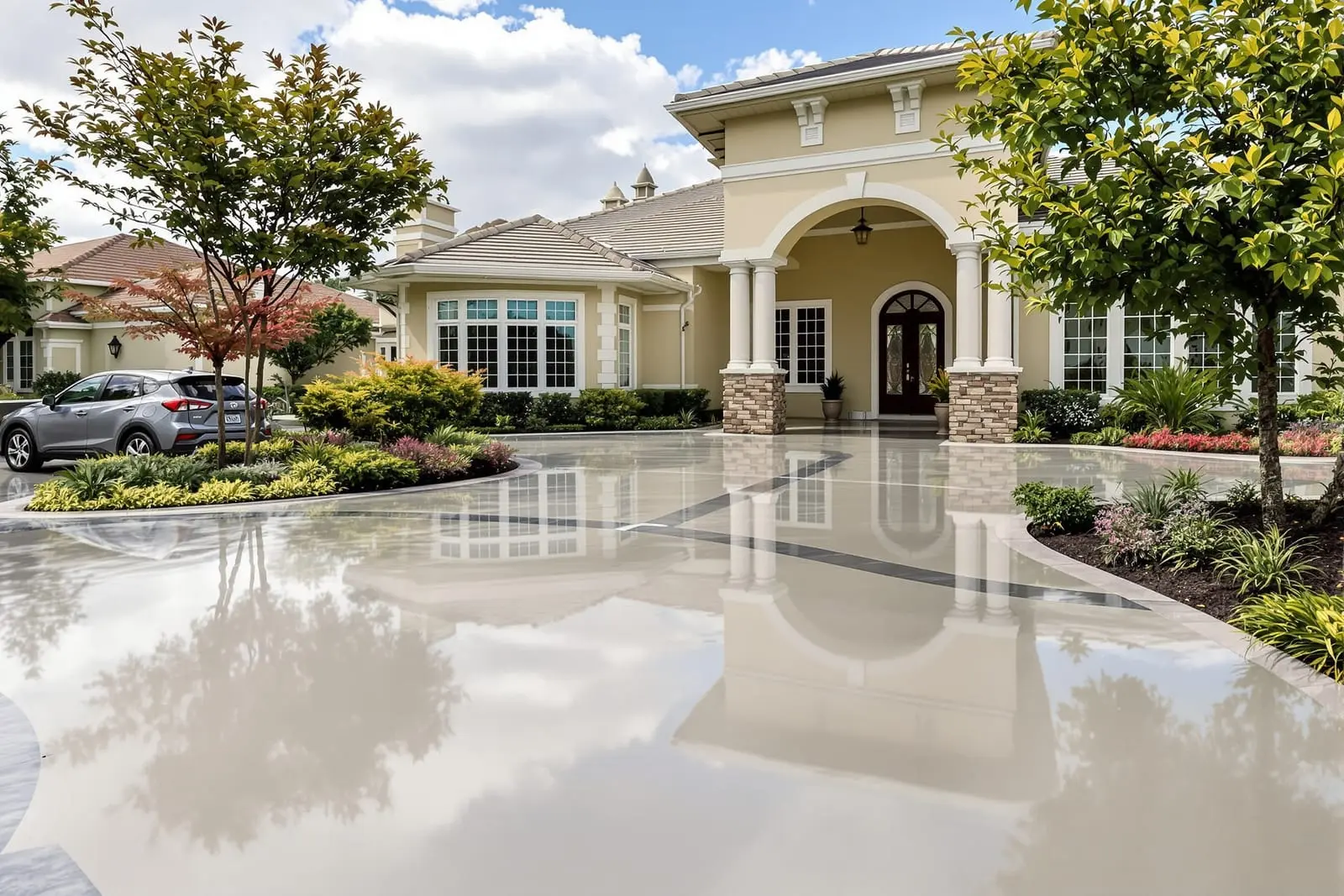
We offer commercial concrete sealing in Little Rock, AR for sidewalks, entries, and interior slabs. Our services include clear sealers, high performance coatings, and non slip finishes tailored to traffic and exposure. Proper preparation ensures good adhesion and long term performance. Request an evaluation of your concrete surfaces and recommended coatings.
Primetime Concrete Little Rock provides professional commercial concrete sealing throughout Little Rock, AR and the surrounding area. Our licensed, insured crew delivers safe, clean, on-time work with a free estimate before anything begins. Call (501) 441-4583 or request your free quote.
Protecting Little Rock Commercial Concrete the Right Way
Hard-working concrete in Little Rock takes a beating from heavy traffic, forklift wheels, food and chemical spills, and our cycle of humid summers and cold snaps. Commercial concrete sealing is not a luxury, it is basic protection that keeps your slab from pitting, peeling, and turning into a safety hazard.
Primetime Concrete Little Rock focuses on commercial-grade concrete sealing and coatings that fit how your property is used. A restaurant patio, a warehouse loading dock, and a medical office lobby all need very different products and surface prep. We look at traffic level, exposure to grease or chemicals, cleaning methods, and slip-resistance needs before recommending a system.
Our goal is simple: keep your concrete safe, good looking, and compliant with your insurer, your lease, and any local or corporate standards, while avoiding closures that hurt your business.
Types of Commercial Concrete Sealers and Coatings We Install
Different commercial spaces around Little Rock need different performance from their concrete surfaces. Primetime Concrete Little Rock installs a range of systems, and we explain the tradeoffs of each so you know what you are paying for.
Penetrating sealers (silane, siloxane, or silane/siloxane blends) soak into the concrete and help repel water, de-icing salts, and mild chemicals. These are ideal for exterior walks, parking decks, and drive lanes at places like shopping centers along Chenal Parkway or office parks in West Little Rock. They do not change the texture much, which helps maintain traction.
Acrylic sealers are common for decorative commercial slabs, like stamped entryways or stained showroom floors. They deepen color and add sheen, and we can adjust the gloss from matte to high-gloss. We broadcast a fine grit additive where slip resistance is needed, such as around hotel pool decks or restaurant entries.
Epoxy coatings are thicker, film-forming systems used in warehouses, fire stations, service bays, and production areas. They provide chemical resistance and make daily cleaning faster. For heavy forklift traffic, we typically combine epoxy primer with a high-solids topcoat and sometimes urethane for added abrasion resistance.
Polyaspartic or polyurethane topcoats cure faster and stand up well to UV in exterior or sun-exposed areas. For retailers who cannot afford long shutdowns, we may use fast-cure systems that can be returned to light traffic in 24 hours, sometimes less, depending on temperature and humidity.
We also install non-slip broadcast systems where safety is a concern, such as loading docks or back-of-house corridors in grocery stores. These use graded aggregates in the coating for traction that meets OSHA-recommended slip resistance.
Our Step-by-Step Commercial Sealing & Coating Process
Correct prep is what separates a professional commercial concrete sealing job from one that peels in a year. Primetime Concrete Little Rock follows a disciplined process tailored to the age and condition of your slab.
First, we walk the property with you, identify problem areas, and test the concrete surface. We check moisture levels, hardness, and for previous sealers or coatings that might affect adhesion. We also note drains, transitions to other flooring, and any ADA-sensitive slopes.
Next is mechanical surface prep. For most commercial jobs we use diamond grinding or shot blasting, not just acid etching. Grinding opens the pores of the concrete for penetrating sealers and creates a uniform profile (CSP rating) for epoxies and other coatings. In occupied spaces we use dust collection systems to control airborne dust as much as possible.
Cracks, spalls, and joint issues are addressed before sealing. We route and fill dynamic cracks with flexible polyurea or polyurethane so they can move without reflecting through the coating. Broken joints or edge spalls are rebuilt with repair mortars designed to work with the coating system selected.
Once the slab is clean, structurally sound, and properly profiled, we apply primers if the system calls for it, then the sealer or coating in the required number of coats. Application methods vary (spray, roller, squeegee) based on the product and size of the area. Each coat is allowed to cure under manufacturer-specified conditions before the next is applied.
Finally, we walk the project with you, point out cure timelines, and mark off zones for light and heavy traffic. You get maintenance guidelines specific to your facility so the system reaches its full life expectancy.
Cost Factors for Commercial Concrete Sealing in Little Rock
Business owners often ask why pricing for commercial concrete sealing can vary so much. At Primetime Concrete Little Rock, we break it down clearly before work begins so there are no surprises.
Square footage and layout are obvious drivers. A wide open 10,000 square foot warehouse in the Little Rock Port area is faster and less expensive per square foot than the same size made up of small, occupied suites in a medical office building with many edges and transitions.
Existing floor conditions can significantly affect cost. Old coatings, thick adhesives from previous flooring, oil saturation in mechanic bays, or damage from years of pallet jack traffic all require more labor and materials for repair and prep. Moisture problems may require moisture mitigation primers, especially on older slabs or those near the river where groundwater can be an issue.
Product selection also matters. Penetrating and basic acrylic sealers are usually less expensive than multi-coat epoxy or polyaspartic systems. However, in high-traffic distribution spaces or food processing areas, cheaper systems fail early, which ends up costing more through downtime and rework.
Access and scheduling affect labor. Night or weekend work to avoid disruption, coordination in high-security facilities, or tight windows in active retail centers can add cost, but may be necessary to keep your operations running. We always present options so you can weigh cost versus impact on your business.
Common Problems With Commercial Concrete and How We Solve Them
Little Rock commercial properties see some recurring concrete issues that we address during sealing and coating projects.
Hot tire pickup at retail centers and car dealerships occurs when low-quality or improperly cured sealers soften under warm tires, then peel off. We prevent this by matching the right chemistry to the environment, allowing proper cure time, and performing test areas when needed.
Moisture-related blistering and delamination is another local issue, especially on older buildings or floors over poorly drained soil. Before installing film-forming coatings, we perform moisture tests. If readings are high, we either change product type or use moisture-tolerant primers to create a stable bond.
Oil and grease contamination in restaurant back-of-house areas and repair garages can interfere with adhesion. Simply pressure washing is not enough. We use commercial degreasers, hot water cleaning, and in severe cases, remove a thin top layer of concrete through grinding to reach clean, bondable material.
Slip hazards are a concern in many commercial ADA routes and entries. Instead of posting more “Caution Wet Floor” signs, we can incorporate traction into the system. This may be a grit additive in acrylic on a front walkway or a full broadcast non-slip epoxy system in a loading dock.
Color inconsistency and roller marks are common with DIY or rushed jobs. Our crews stay with wet edges, set logical break points, and control lighting during application so defects are caught early. For highly visible areas like lobbies or showrooms, we may use two-person application teams to keep finishes uniform.
What Little Rock Businesses Should Know Before Hiring a Sealing Contractor
Choosing a commercial concrete sealing contractor in Little Rock is about more than the lowest quote. The wrong system or poor prep can shut your doors unexpectedly when coatings fail.
Ask about surface prep equipment and methods. If a contractor only talks about acid etching or “just pressure washing,” be cautious, especially for epoxy or polyaspartic coatings. Primetime Concrete Little Rock owns grinding and shot blasting equipment sized for commercial work and we can explain exactly which profile your floor needs.
Request product information sheets (TDS and SDS) for any system being proposed. These documents state recommended film thickness, cure times, and chemical resistance. We provide these before work starts so you can confirm that what you are getting matches your industry requirements, whether that is for healthcare, food service, or industrial use.
Discuss scheduling, noise, and dust control. In multi-tenant buildings along Cantrell or in the River Market district, neighbors and other tenants matter. We coordinate with property managers, use dust collection where feasible, and can phase work to keep fire exits and essential paths open.
Finally, clarify warranty terms and maintenance expectations. We explain what is covered, what is not, and what daily or weekly cleaning practices will extend the life of your sealed or coated concrete. That transparency builds trust, and it also protects your investment in the long run.
Why Local Experience Matters for Commercial Concrete Sealing
Little Rock’s mix of older downtown buildings, expanding suburbs, and industrial facilities along the river means there is no one-size-fits-all approach to commercial concrete sealing.
Older structures may have multiple layers of past coatings or adhesives, as well as uneven slabs that need careful prep to avoid trip hazards. Newer tilt-wall buildings often have harder, burnished slabs that require more aggressive profiling before coatings will bond. Primetime Concrete Little Rock has worked across that full range right here in central Arkansas.
Climate also plays a role. Our humid summers and freeze-thaw cycles in winter can accelerate damage to unsealed exterior concrete and influence coating cure times. We schedule applications to avoid extreme surface temperatures and we adjust product selection so UV exposure and moisture will not break the system down prematurely.
Local codes and practical expectations matter too. While most concrete sealing work does not require a separate building permit, fire marshals, health inspectors, and corporate facility standards often specify slip resistance, cleanability, and cure safety. We are used to working within those requirements, especially in restaurants, clinics, schools, and warehouses.
Because we live and work here, we want our commercial neighbors’ properties to hold up over years, not months. That means honest recommendations, realistic timelines, and careful workmanship on every commercial concrete sealing and coating project we take on.
“
Professional commercial concrete sealing & coatings, done right the first time, quality materials, honest pricing, and results that last.
Primetime Concrete Little Rock
Commercial Concrete Sealing & Coatings Across Our Service Area